
Voice AI on the Ranch: Why Talking Beats Typing for Cattle Records
Gloves, chutes, dust, and two free seconds — the field conditions that kill typed data entry are exactly where voice capture works. How AI turns a spoken sentence into a structured cattle record.
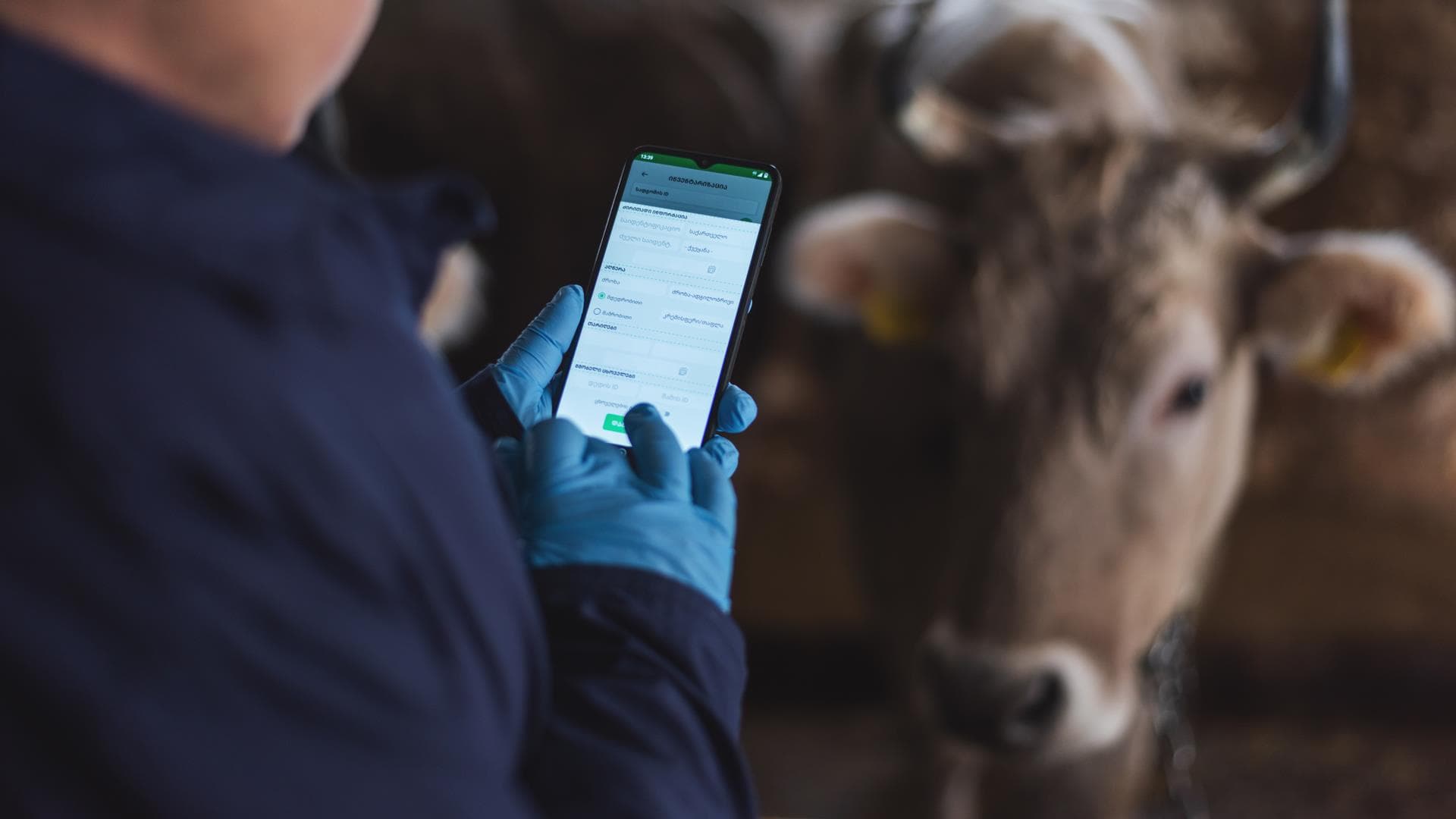
Every failed ranch software story ends the same way: the records were supposed to be entered, and they weren't. Not because anyone was lazy — because the entry moment was impossible. Wet gloves. A squeeze chute cycling every 40 seconds. A phone screen in direct sun with manure on it. Data entry designed for a desk, deployed to a feed alley.
Voice flips the constraint. Talking is the one interface that works with your hands full.
The two-second window
Watch chute work and time the gaps. Between animals there are perhaps two usable seconds — enough to say a sentence, nowhere near enough to navigate an app, find the animal, pick the product from a dropdown, and type a dose. So the crew does the reasonable thing: they remember it, or jot a code on a scrap of paper, and reconstruct records at day's end.
Reconstruction is where records die. Memory drops the third treatment of the morning. The scrap says "P14 - 3 - drax" and next week nobody's sure if that was three head or animal #3.
What the AI actually does
Voice capture without AI is just a memo — someone still has to type it up later. The step that changes everything is structuring: the model takes a natural sentence and extracts a complete record.
Say: "Treated pen 14, three head, Draxxin 6 ml, pulled one to the hospital pen."
Cooper AI, the assistant inside CattleOS, produces:
| Field | Value |
|---|---|
| Pen | 14 |
| Head treated | 3 |
| Product | Draxxin |
| Dose | 6 ml |
| Action | 1 moved to hospital |
| Withdrawal clears | calculated automatically |
| Date, time, recorded by | automatic |
You confirm what it understood — a glance, not a form — and the record is done. Pen counts update, the withdrawal window starts tracking, and the health history grows, all from one sentence.
Retrieval is the other half
The same interface that captures records can answer from them. "What happened in pen 14 this week?" gets a real answer — three head treated, one in hospital, withdrawal clears on the 24th — pulled from verified records, not generated from thin air. If the data isn't there, Cooper says so rather than inventing an answer. For a manager, that's the difference between a search tool and a guessing machine.
What voice capture is not
Honesty matters here. Voice is the capture layer, not magic:
- It doesn't replace judgment — it records the decision you already made, faster
- It needs a confirmation glance — good systems show you the structured result before saving
- It's one input among several — EID wand scans, scale integrations, and quick-tap workflows all feed the same record; voice wins when hands are full and speed matters
Why this is the adoption unlock
Every feature downstream — cost of gain, withdrawal tracking, audit reports, herd analytics — depends on records existing. And records exist only if capture fits the work. Typing never did. Paper captured but couldn't compute.
Voice is the first interface that matches the actual conditions of cattle work: hands busy, eyes up, two seconds at a time. That's not a convenience feature. For most operations, it's the difference between software that gets used and software that gets abandoned by June.
Frequently asked questions
How does voice AI work for cattle records?
You speak naturally — 'treated pen 14, three head, Draxxin 6ml, pulled one to hospital' — and the AI extracts the structured fields: pen, head count, product, dose, action, and date, then calculates derived data like withdrawal windows. The record lands in the same database as typed entries, but capture takes seconds and works hands-free.
Does voice recording work offline in the field?
In CattleOS, yes — voice notes are captured on the device regardless of signal and processed into structured records when the device syncs. The capture moment never depends on connectivity, which matters because chutes and pastures rarely have it.
Is voice AI accurate enough for treatment records?
Modern speech models handle field audio well, and the structured result is shown for confirmation — you see the pen, product, and dose the system understood and can correct before it saves. That review step makes voice capture more accurate in practice than end-of-day recollection typed into a form.
CattleOS Team
Author