
Why Offline Capability Is Non-Negotiable in Cattle Management Software
Chutes, barns, and remote pastures don't have cell service. Here's why offline-first design is the make-or-break feature in cattle management software, how sync actually works, and what to test before you buy.
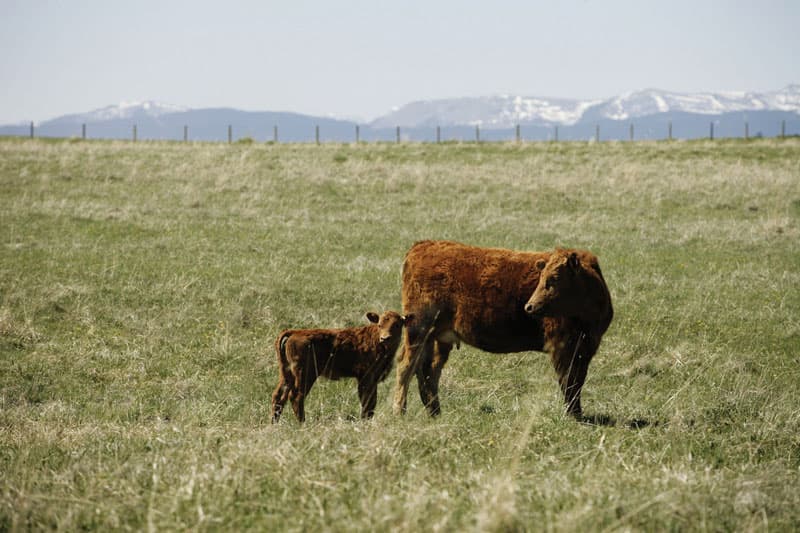
Ask any rancher where the actual work happens: at the chute, in the calving barn, out on grass, in pens at the far end of the yard. Now check the signal bars in those places.
That mismatch — work happening where connectivity isn't — is why offline capability is the feature that decides whether cattle management software gets used or abandoned.
The failure mode is silent
When software requires a connection to save records, the failure isn't a crash or an error message. It's quieter than that:
- The record "doesn't save" at the chute a few times
- The crew stops trying and goes back to the pocket notebook
- Notebook entries get typed in "later" — some of them
- Six months in, the software has half the story and nobody trusts it
Once records are incomplete, every report built on them is suspect, and the software has failed at its one job: being the record you can rely on.
What "offline-first" actually means
There's a real technical difference between apps that tolerate a dropped connection and apps designed for the field:
- Offline-tolerant: the app caches some data and might queue a record or two, but complex actions fail without service, and a force-close can lose queued work.
- Offline-first: every record — treatments, moves, weights, deaths, notes — is written to the device's local database instantly. Sync is a background process, not a requirement. The app is fully functional for days without service.
CattleOS is built offline-first because our users work in barns with metal roofs, pastures measured in sections, and yards where the office Wi-Fi doesn't reach past the scale house.
Multi-crew sync, the honest version
The harder problem is several people working offline at once. A pen rider records pulls on one phone while the processing crew records treatments on another — both offline. Good offline-first systems merge those records into one operation-wide history when each device syncs, keeping animal counts and pen assignments consistent.
Ask any vendor: "Two people record a move on the same pen while both are offline. What happens when they sync?" If the answer is hand-waving, test it yourself.
Voice capture and offline are better together
Offline capability gets records saved; capture speed gets them made in the first place. CattleOS combines both: Cooper AI voice capture works in the field, so "treated pen 14, three head, Draxxin 6ml, pulled one to hospital" becomes a structured record — pen, count, product, dose, withdrawal date — on a phone with zero bars, syncing whenever the truck rolls back into coverage.
The pre-purchase test
Before committing to any platform, run this five-minute test on a trial account:
- Airplane mode on
- Record 10 treatments, a pen move, and a death loss
- Force-close the app, reopen — confirm records survived
- Leave airplane mode on for a day, keep recording
- Restore service — confirm everything syncs without manual steps
If a vendor can't survive that test, the software won't survive your operation.
Frequently asked questions
Does cattle management software work without internet?
Only some of it. Offline-first apps like CattleOS store records on the device and sync automatically when service returns, so crews can record treatments, moves, and counts anywhere. Many web-based tools require a connection to save records and are effectively unusable at chutes and remote pastures.
What happens to records made offline when service returns?
In an offline-first app, records queue locally on the device and upload automatically the moment connectivity is restored — no user action required. Records made by multiple crew members offline merge into the shared operation record when each device syncs.
How do I test if a cattle app really works offline?
Put the phone in airplane mode, record ten treatments and a pen move, force-close the app, reopen it, and confirm the records are still there. Then restore service and verify everything syncs. Do this during the trial — not after you've bought.

Hashim Farooq
Author
Related posts
September 9, 2026
Cattle Health and Breeding Records: Paper vs Spreadsheets vs Software
Treatment logs, vaccination records, pregnancy checks, and calving data — comparing the real costs of keeping cattle health and breeding records on paper, in spreadsheets, and in dedicated software.
May 27, 2026
Pounds Weaned Per Cow Exposed: The Metric That Ranks Your Cow Herd Honestly
Average weaning weight flatters your herd; pounds weaned per cow exposed tells the truth. How to calculate it, what the number reveals about fertility and death loss, and how to raise it.
May 13, 2026
EID Tags and Traceability: What the USDA Rules Mean for Your Cattle Records
USDA's animal disease traceability rule requires electronic ID for certain cattle moving interstate. Here's who's affected, what EID actually changes day-to-day, and how to make the tags pay for themselves.