
What Is Cost of Gain? How to Calculate It and What It Tells You
Cost of gain is the single number that decides feedlot and stocker profitability. Here's how to calculate it, what a good number looks like, and why most operations can't see it until months too late.
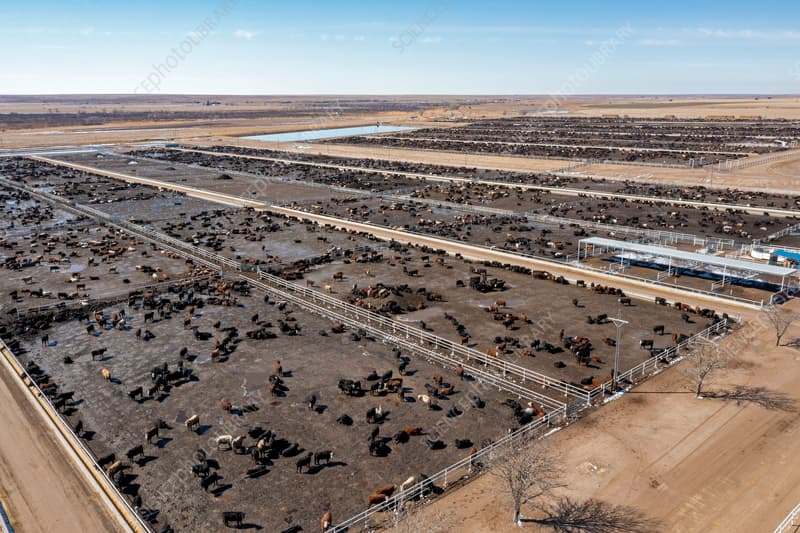
Ask a feedlot manager what their cost of gain was on the last close-out and you'll get a number. Ask what it is on the pens standing in the yard today, and most operations go quiet. That gap — between knowing after and knowing during — is where feeding margin is won and lost.
The definition
Cost of gain (COG) is the total cost of putting one pound on an animal.
Cost of gain = Total costs during the period ÷ Total pounds gained
"Total costs" should include everything the cattle consumed while in your care:
- Feed — usually 60–75% of the total
- Health — treatments, vaccines, processing
- Yardage — the daily charge covering labor, equipment, facilities
- Death loss — the cost of cattle that don't finish, spread over the ones that do
- Interest — the money tied up in cattle and feed
A worked example
A pen of 100 steers arrives at 650 lb and sells 180 days later at 1,400 lb (after a 1.5% death loss, 98 head ship).
| Item | Cost |
|---|---|
| Feed (180 days) | $38,900 |
| Health and processing | $3,200 |
| Yardage ($0.55/head/day) | $9,900 |
| Death loss (2 head at landed cost) | $2,600 |
| Interest | $2,400 |
| Total | $57,000 |
Pounds gained: 98 head × 750 lb, plus partial gain on the two dead — call it 73,900 lb.
Cost of gain: $57,000 ÷ 73,900 = $0.77/lb.
If those pounds sell for more than $0.77 each (accounting for the purchase cost of the original 650 lb), the pen made money on gain. Change feed conversion by half a pound, or add a respiratory wreck in week three, and the number moves fast.
Why the number arrives too late
The math is simple; the data is the hard part. Cost of gain needs feed deliveries allocated to the right pen, treatments recorded when they happen, accurate head counts through every move, and weights. On most operations those live in a feed truck printout, a treatment notebook, a whiteboard, and a scale ticket — assembled into a spreadsheet at close-out, months after the decisions that would have mattered.
Knowing in-season changes real decisions:
- Ration changes show up in conversion within weeks — if you're watching
- A pen going backward on health costs gain twice: treatment cost and lost performance
- Marketing timing — when COG rises above the value of additional gain, feeding longer loses money on every pound
Getting to pen-level, in-season cost of gain
The operations that see COG in-season all do the same thing: they capture the inputs as work happens, in one system, tied to the pen.
That's the design center of CattleOS. Feed deliveries, treatments, moves, counts, and weights are recorded in the field — by voice or a few taps, offline if needed — and every record lands on the right pen with a date and a cost. Cost of gain stops being a close-out autopsy and becomes a number you check like the weather.
The takeaway
Cost of gain isn't a report; it's a discipline. The formula takes thirty seconds. The advantage goes to the operation whose records are complete enough to run it any day of the week, for any pen in the yard.
Frequently asked questions
How do you calculate cost of gain?
Cost of gain = total costs during the feeding period (feed, health, yardage, death loss, interest) divided by total pounds gained. If a pen consumed $54,000 in costs and gained 45,000 pounds, cost of gain is $1.20 per pound. Compare it against the sale price per pound of gain to see whether the cattle made money.
What is a good cost of gain for cattle?
It moves with feed prices, so there is no permanent benchmark. Feedlot cost of gain has commonly ranged between roughly $0.90 and $1.40 per pound in recent years, while cattle on grass can gain for well under $1.00. What matters more than the absolute number is knowing your own figure by pen or group, in season, so you can act while cattle are still on feed.
What is the difference between cost of gain and break-even?
Cost of gain measures what each added pound cost. Break-even combines purchase price, all feeding costs, and expected out-weight to give the sale price per hundredweight you need to avoid losing money. Cost of gain is an input to the break-even calculation.
CattleOS Team
Author
Related posts
September 9, 2026
Cattle Health and Breeding Records: Paper vs Spreadsheets vs Software
Treatment logs, vaccination records, pregnancy checks, and calving data — comparing the real costs of keeping cattle health and breeding records on paper, in spreadsheets, and in dedicated software.
September 9, 2026
Why Offline Capability Is Non-Negotiable in Cattle Management Software
Chutes, barns, and remote pastures don't have cell service. Here's why offline-first design is the make-or-break feature in cattle management software, how sync actually works, and what to test before you buy.
May 27, 2026
Pounds Weaned Per Cow Exposed: The Metric That Ranks Your Cow Herd Honestly
Average weaning weight flatters your herd; pounds weaned per cow exposed tells the truth. How to calculate it, what the number reveals about fertility and death loss, and how to raise it.